Home » 2026
Yearly Archives: 2026
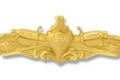
Why Did the SWO Navy Allow Submarine Officers to Corrupt its Surface Warfare Qualifications?
As stated in previous posts, some of the US Navy’s non-combatant surface ships were (and may still be) commanded by submarine officers. In the 1970/80s, most of these submariners came from diesel boats that were in the process of being phased out in favor of nuclear-powered submarines. Because these officers had nowhere else to go for command at sea positions, they were assigned to various support ships such as tenders and ships like the USS Point Loma (AGDS-2), whose mission varied from hauling deep submergence vehicles to supporting the nuclear-powered submarine Trident Missile testing program.
The problem was that these submariners had no previous experience on a surface ship. Evidently, the Surface Warfare Officer (SWO) navy did not view this lack of shiphandling experience as a barrier to successful command. I take issue with that for several reasons:
1) Navy instructions on eligibility for SWO qualifications explicitly state that officers can only earn qualification while being assigned to a surface ship. Not on temporary orders. One must be assigned under Permanent Change of Station (PCS) orders as a line officer to be eligible. For junior surface line officers, qualification was mandatory while assigned to their first ship. Non-line officers (i.e., Chief Warrant Officers, Limited Duty Officers) were also eligible, but qualification was voluntary, even though many had much more experience at sea. Enlisteds were also eligible for ESW (Enlisted Surface Warfare) qualifications, under a different set of standards, and that was also voluntary.
2) The submarine officers assigned to the USS Point Loma were automatically granted SWO qualifications without testing their knowledge by anyone in the SWO community. In addition, the Commodore’s chief of staff, a submarine officer who was never assigned to a surface ship, was awarded SWO qualification, despite his ineligibility. How and why?
3) These same submarine officers were in the position of evaluating and granting SWO qualifications to their junior surface line officer subordinates. It is unknown how anyone could believe these senior submariners had the experience to properly evaluate junior officers on SWO topics. Submariners may have seamanship experience, but how does that translate to proper shiphandling experience? The USS Point Loma CO (Capt D.J. O’Shea), despite his 30+ years of service, was issued a punitive Letter of Admonition for negligent handling of a vessel, after a collision that occurred while entering Port Hueneme CA harbor. That resulted in damage claims against the government. That also amounted to UCMJ (Uniform Code of Military Justice) violations. His shiphandling skills were something less than perfect. Did that make him qualified to evaluate junior SWO candidates, expecting them to perfect their shiphandling skills in one tour of duty on a ship?
4) What I witnessed on the USS Point Loma was that senior submarine officers were totally unfamiliar with the Navy instructions on the management of the qualification program, to the point that they were uninvolved, except to lend their signatures. Neither CO or XO attended SWO oral boards, which was supposed to be the final step in testing knowledge prior to granting qualification. Instead, they delegated that process to a recently SWO qualified lieutenant who chaired the boards. Most of the officers she was allowed to evaluate were also her peers, which was a conflict of interest. This woman lieutenant expressed her desire to eliminate her competition and did so with gossip and slander, to influence the commanding officer in performance evaluations. Good leadership requires a CO to search for the truth before making such decisions. That would include getting more than one side of the story.
5) No one in the chain of command monitored the integrity of the qualification program. No standards of knowledge were identified; qualifications were granted based on politics rather than merit. In other words, if enough board members liked you, they would vote yes, even with significant knowledge deficiencies. I have to wonder if submarine warfare qualifications are managed the same way.
6) The entire process for SWO qualification was an exercise in politics. After completing SWO school, we were issued a set of booklets with lists of topics that required SWO candidates to get signatures from qualified officers from their respective ships. So, one had to play kiss-up to get the signatures which were often given away without any accountability. Once the booklets were completed, and an arbitrary amount of time was spent standing watch on the bridge, an oral board would be scheduled as the final step. It was a silly waste of time, and I am baffled that anyone took this process seriously.
I have never known anyone as dishonest and cowardly as the officers I knew on the USS Point Loma, especially the CO, DJ O’Shea and LT Donna Hopkins. They did not earn SWO qualifications, it was granted to them for political reasons. The idea of having a SWO qualification from a non-combatant ship was ridiculous. The officers I served with know that what I say is true, but they will never respond, out of cowardice. Yet, they call themselves “warriors.” I would never emulate the behavior of any of these officers, and I did not respect any of them. I consider being denied a fake SWO qualification to be a badge of honor. I am a truthteller and proud of it.
I challenge anyone reading this to respond and answer me. I have made these points known for 40 years in rebuttals, BCNR petitions, and a federal lawsuit. All the navy does is deflect and deny, which is expected of institutions who see their job as protecting themselves for their reputation and any liability. Obviously, I have no respect for it. What would it take for any SWO officer to respond to this? Active, veteran or retired?

